
Enter Valid Zip.


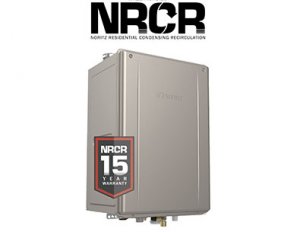
Although Noritz builds its water heaters to the highest standards, from time to time you might get an error code on your unit. “These codes can diagnose problems that otherwise might remain unnoticed until unit failure, thus saving on repair and replacement costs,” says Randy Oshiro, Assistant Manager of Engineering at Noritz. However, the error codes’ meaning may not always be clear to a homeowner.
For that reason, we’ve constructed the following helpful outline of the seven most common error codes and their resolutions. Some resolutions are simpler than others, but you should always err on the side of caution and contact a licensed contractor.

This indicates ignition failure in your tankless water heater. It means that your unit is not firing up to heat the water, a situation that can be caused by insufficient gas supply, insufficient airflow or debris on the ignition plug.
After checking to see if the gas is turned on, call a licensed contractor. He or she will make sure your gas valve is open, the exhaust vent is unobstructed and the ignition plug is firmly attached and free of debris.
A code 12 means the unit has a weak flame and that water is not being heated properly. Similar to a code 11, this is caused by lack of gas or airflow.
Call your licensed contractor who will likely take similar steps as outlined for code 11.
A sharp spike in outlet water temperature will cause a code 16. This often results from scale buildup, which hampers heat-transfer efficiency and makes the unit try to compensate by burning hotter.
Since this error can be caused by scale buildup or hard water, performing a descaling procedure or using a water softener may resolve it. Contact your licensed contractor to make sure this is the case.
This code indicates a problem with condensate drainage. In condensing tankless water heaters, a special drain line equipped with a neutralizer (to reduce the acidity of the outflow) removes the condensate. A blockage in the condensate drain line or incorrect condensate drain piping would cause the burner to flood if not for this error code.
Call your licensed contractor, and he or she will check to make sure the condensate drain line is properly routed and unobstructed.
Improper circuit board settings will cause a code 73 error. Changing a jumper connection or dip switch while power is supplied to the heater can trigger the problem, as can an improperly programmed circuit board.
Unplug the heater for 30 seconds and then plug it back in. If the error code persists, call a licensed contractor.
This error code involves a breakdown in communication between two tankless water heaters using the Quick Connect Cord. It can occur when more than one remote is hooked up to handle two Quick-Connected units.
Make sure that only one remote control is hooked up when two units are connected. If the error continues, contact a licensed contractor.
A code 90 indicates a combustion abnormality caused by an improper mixture of air and fuel. Possible culprits are insufficient gas supply, a blockage in the fuel vent or debris in the fan motor.
You will need a licensed contractor to resolve this error. He or she will check gas pressures, venting length, dip switches, etc.
For help with finding a licensed contractor to fix these various error codes, please use the Noritz Find a Service Rep tool.
How to Perform Tankless Water Heater Internal Maintenance
If you have installed a Noritz tankless water heater, then you know the convenience and water-saving benefits it yields by providing hot water on demand for your clients. To keep that hot water flowing at the correct temperature, however, they need to know to call you back to perform regular maintenance every two to three years.

In this post, we will look at how to perform tankless water heater internal maintenance.
The tankless unit has now been serviced and is ready to put back together. All maintenance info can be found in your Noritz homeowner’s guide.
To view video instructions for this maintenance process, please click here.
Tips for Performing Tankless Water Heater External Maintenance
If you own a Noritz tankless water heater, you know the convenience and water-saving benefits it yields by providing hot water on demand. To keep that hot water flowing as long as possible, it is important to perform regular tankless water heater external maintenance.
In this post, we will look at how to perform external maintenance of your tankless water heater. The following is based on an instructional video called How to Perform Noritz Periodic Maintenance.


Are you planning a new bathroom remodel? Don’t let it become a nightmare. Here are five common mistakes and how to avoid them.
Along with kitchens, bathrooms are the rooms homeowners most frequently want to renovate. A good bathroom is stylish, luxurious, functional and comfortable. But getting there isn’t always easy, and many homeowners make costly or time-consuming mistakes. Here are the top five mistakes to avoid when remodeling your bathroom:
One of the most common problems with bathrooms is that they end up feeling crowded, too small or inconveniently arranged. This is especially true when adding a new bathroom where there wasn’t one before. Think carefully about how doors and drawers will open, whether a sloping ceiling will be a bother, and whether you really have space for the fixtures you’re choosing. Consider a pedestal sink in lieu of a vanity, with some shelving high up on the wall.
Bathrooms are among the projects most likely to run over budget and past deadline. This is because they often require plumbing, electrical, and tile work on top of routine renovation. As a result, you need to look at quotes from contractors very carefully. If one is lower, make sure absolutely everything is included before you jump on it, and only pay half up front.
Ventilation is absolutely essential in a bathroom, even when there is no shower/bath. There will be moisture in every bathroom and if it isn’t being vented it will lead to mildew or mold, which fuels sickness and allergies. As a general rule of thumb, if you have no way of venting a space then it shouldn’t be a bathroom.
Bathroom fixtures come in a wide range of styles and price points. Likewise, flooring ranges from the low-cost rolls to expensive tile. We all need to stay within budget, but try to aim for at least the mid-level bathroom fixtures. They really will hold up longer and look better for years to come.
If you’re adding a new bathroom, don’t make the mistake of investing in an old fashioned tank-based water heater. A tankless water heater will save you big money on energy bills and provide hot water on demand. By providing proper maintenance and replacing your water heater when necessary will give you years of enjoyment in your new bathroom remodel.

Before installing anything in your home, you probably go through a research process to determine who is best qualified to successfully complete the job. You may browse the internet for contractor reviews or talk to neighbors for recommendations. Even though any contractor in a given field is probably capable of doing the job, you want one who has been vetted and proven to know his or her trade.
The same holds true a Noritz tankless installation. According to Jason Fleming, Sr. Marketing and Customer Care Manager for Noritz America, “Any contractor can install Noritz, but it is in your best interest to utilize contractors that have been trained to install and service Noritz products.”
The importance of a proper tankless water heater installation cannot be overemphasized. “Improper gas line sizing or venting, unclean or insufficient makeup air and cross lines in the plumbing are all potential installation mistakes that can be made if the contractor is not 100 percent knowledgeable,” warns Fleming. “The problem is that many of these mistakes will not present themselves immediately,” he adds.
Thus, your tankless installation may seem sound at first, but a few weeks or months down the road, the error messages might begin to crop up. “Ultimately, an improper installation will significantly reduce your tankless water heater’s life,” admits Fleming.
You might be wondering how on earth to locate an installing contractor who is familiar with Noritz products. After all, sometimes it’s a hassle just to verify that the contractor is insured. “We have developed an online dealer locator to make finding the ideal tankless installer quick and easy,” assures Fleming.
The dealer locator simply asks for your zip code and a distance radius ranging from two to 50 miles. Upon entering the information, you will receive a list of nearby Noritz installers and their contact information.
“Noritz trains contractors daily to ensure they have the most up to date information on our ever-changing product line,” concludes Fleming. “Do your research and make sure your contractor is familiar with tankless, and familiar with Noritz.”
Tankless heaters aren’t just for homes anymore. Here are four ways a commercial tankless heater can help your business—and save you money.
Often when we talk about the advantages of tankless water heaters, we frame the conversation in terms of the home consumer. But increasingly businesses are switching to tankless as well. Why? Well, here are four major benefits a tankless heater brings:
What kind of hot water capacity does your business need? What has you considering going tankless?

Ever notice a crusty white or green substance on your shower wall, showerhead or faucet? It’s called lime scale or scale deposits, and it forms when the calcium in water separates and begins to accumulate.
Although not as visible, this same process occurs inside both storage tank and tankless water heaters to varying degrees, depending upon the hardness of the water in your area. Randy Oshiro, Assistant Manager of Engineering at Noritz, explains how this happens and how to eliminate it in a tankless unit.
“Scale is formed when the heat energy inside a tankless water heater separates calcium from water,” explains Oshiro. “Those calcium deposits will accumulate on the heat exchangers over time and, left unchecked, lower your water heater’s efficiency and life span.”
Essentially, the built-up scale makes heat transfer within the tankless unit more difficult. As a result, the unit has to work harder in order to heat the water to the set-point temperature. As with anything that is strained, an overworked water heater can potentially give out long before its time. Meanwhile, it will unnecessarily waste energy through its inefficient operation.
Detecting scale buildup is not always easy. Fortunately, many Noritz tankless water heaters come with scale detection software technology. This technology measures changes in heat transfer inside the unit to figure out if there’s too much scale. If it detects that heat transfer has slowed, it sends an error message that it’s time to descale.
For those units that do not include this software, Oshiro recommends relying on experience when deciding when to descale. “After installing your water heater, schedule a maintenance checkup in one year. If, during that checkup, your plumber notices significant scale buildup, you will know that you should descale at least once per year. If not, you can go longer,” advises Oshiro, adding that Noritz does plan to implement scale detection software on all future products.
We’ve mentioned descaling, but what is it exactly, and how is it done? “Descaling refers to neutralizing the calcium deposits,” states Oshiro. “If you’ve ever poured vinegar on a clam shell, you probably noticed that it disintegrated into a milky liquid. The same principle applies to getting rid of scale.”
To descale a tankless water heater, Noritz recommends pumping kitchen-grade vinegar through the system for about an hour. Although a plumber is recommended, if you have the right equipment and ability, Oshiro says it can be a do-it-yourself job. Noritz provides descaling procedures in this FAQ.
When you descale your tankless water heater, all of the calcium deposits will dissolve just like that clam shell, and you will once again have a fully operational and efficient unit.

Noritz Tankless Installer of the Year Contest
What sets you apart from your fellow installers? What drives and inspires you to do the best work possible? We’d love to hear about it!
Noritz is having our first ever Noritz Tankless Installer of the Year Contest , and you could be the winner!
To enter, make a video that is no longer than 15 seconds. In this video, briefly tell us why you choose to install Noritz tankless water heaters in your projects. Your reason could be anything from being one of our original installers, to your commitment to being green, or your hard work and dedication to your profession. We want to know why you spec Noritz!
Entering is simple!
Phase One: September 8 to October 31
Phase 2: November 2 to 6
Once your video is posted, it’s time to vote. The video with the most votes by November 6 will earn the title of Installer of the Year and our amazing prize pack!
Follow the conversation online by tracking the hashtag #NoritzPro <link: https://bit.ly/1JPpvse> and contact us at Noritz.marketing@gmail.com for any details.

In today’s fast-paced society, people want everything now. We are equally impatient when it comes to instant hot water — and for good reason: a lot of water is wasted down the drain, as we wait for the warm water to arrive. Whether you are washing your hands, the dishes, or taking a shower, you want hot water immediately.
By now you may have heard about tankless water heaters and how they provide instant hot water “on demand.” You may interpret this as meaning that as soon as you turn on the faucet, warm water will begin flowing like a geyser.
It is an understandably common myth. Although tankless water heaters do provide hot water on demand by detecting when you turn on the faucet and instantly heating incoming water, they cannot make that water move any faster through the piping.
“The speed at which you get hot water is wholly dependent on the location of the tankless water heater relative to the fixture,” says Jason Fleming, marketing and customer care manager at Noritz America. “If your fixture is right next to the heater, you will hardly have to wait at all. But if you are showering at the other end of the building, that wait time is not going to decrease.”
With tankless, once the hot water does reach you, however, it will never ever run out, unlike a tank-type heater, which contains a finite amount of water.
Those who want immediate hot water have the option of installing a hot water recirculation system. Recirculation operates through a “loop” created in a home’s or building’s plumbing system. In addition to supply lines connecting the water heater to each outlet, a recirculation system also has a return line back to the heater— either from each hot-water outlet or from only the farthest fixture. A circulating pump moves hot water through this loop — in some systems, constantly, even when there is no demand for hot water — resulting in “instant” hot water when the tap or shower is turned on.
The Noritz NRCP line of residential water heaters offers immediate hot water, but without the energy consumption and expense of an always-on circulator. Instead of having hot water flow through the system continuously, an integral display on the front of the water heater allows homeowners to program its arrival at the outlet with a precision down to the half-hour.
An alternative, “auto” setting permits the system to “learn” a household’s water-usage routines quickly and automatically control the recirculation loop-activation times, allowing for immediate hot water when it is needed most.
In a sense then, a hot water recirculation system is the high-speed internet of indoor water supply. Combined with a tankless water heater, it truly will allow for instant, unlimited hot water.

Taking a shower should be enjoyable, meant to energize you in the morning, calm you in the evening
and always leave you feeling refreshed and clean. Unfortunately, little annoyances can detract from the
overall experience, so we have created a list of the top five shower problems and solutions to resolve them.
1. Running Out of Hot Water
If you have a tank-type water heater, there is a finite amount of hot water you can use before you deplete the reserve in the storage tank, which usually holds from 30 to 50 gallons. This becomes unpleasantly apparent whenever you start a shower after someone has just taken one for an hour—there is little to no hot water left.
A Noritz tankless water heater eliminates this problem. Unlike traditional water heaters, which constantly heat the water, tankless operates on-demand with a high-powered burner. This means that once you turn that faucet, the tankless unit will kick into gear, and you will enjoy as much hot water as you need for as long as you need it. You could even take a five-hour shower. Just don’t blame us for the water bill.
2. Waiting for Hot Water
When you step into your shower, you want to get clean now…not three minutes later when the water has finally warmed to a suitable temperature. Waiting around for warm water is not only an annoyance, but also an energy-waster, since potentially gallons of unused cold water — and hot water if you wait too long to get in — are flowing down the drain.
You may reduce the wait time for hot water by installing a tankless water heater, which will heat water on demand. However, this does not eliminate the time it takes for the water to travel from the heater to the shower head. A better solution involves installing a hot water recirculation system that will keep warm water close to the outlet with the help of a timer or sensor. The new Noritz NRCP Condensing Tankless Water Heater uses a built-in pump to circulate hot water on demand, eliminating both the wait for and the waste of hot water.
3. A Clogged Drain
Clogged drains can mean having to stand in stagnant water while showering. Yuck. Most of the time, hair and dirt cause these clogs, and they can be avoided by placing a hair catcher in your drain. Another preventive measure involves pouring a gallon of boiling water down the drain after showering to loosen up any remaining gunk.
For tougher clogs, you can use a bent wire to remove hair, dirt and soap scum. Vinegar or any CLR product can also be poured down the drain to unclog it. In some cases, a good old-fashioned plunger may be required to remove the obstruction. If none of these options work, it may be time to call a plumbing professional.
4. Reduced Flow
You are standing in the shower enjoying a refreshing blast of water when suddenly the torrent turns into a sprinkle and you can barely wash your hands, much less your body. What Most plumbing systems use a trunk-and-branch design, meaning that a large pipe (a “trunk”) runs from one end of the structure to the other, and smaller pipes “branch” off to individual fixtures. If you are taking a shower on the far end of your home and someone opens a faucet,starts a clothes washer or flushes a toilet, water will get diverted, and you will be left with less. Many fixes to this problem can be costly, such as increasing your pipes’ diameter so more water flows toward each fixture. One totally free option that you can implement today is to reduce your toilet’s water usage. Close the supply valve to your toilet slightly, so that it does not take in as much water. Check with a plumber before doing this, though, since the less water going to the toilet, the less flushing power it has!
5. Bursts of Hot Water
The opposite of running out of hot water in your shower is getting scalded by a sudden rush of This problem has the same cause as “Reduced Flow”: if you are in the shower and someone flushes a toilet elsewhere, cold water is getting drawn to the toilet. With less cold water “tempering” your hot water, the water coming into your shower will be much hotter than the Installing high-efficiency toilets should help alleviate this problem by reducing the amount of water needed to flush them. Another fix involves installing a thermostatic mixing valve in your showers. This device will modulate the hot- and cold-water flows, whatever the usage by other fixtures, to keep the temperature of the shower consistently safe as well as comfortable.