
Enter Valid Zip.


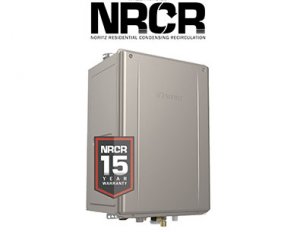

Noritz Combi Unit At Work
Stanwood, Wash., resident Brian Fleming had a serious heating problem in his two-story home. The 10-year-old, split-level structure had lacked effective space heating since day one.
“The builders had not designed my forced-air heating system to handle two floors, so the downstairs portion was always cold,” explains Fleming, who used his furnace system for less than 25 cycles annually, instead relying on a gas-powered fireplace to heat his upper floor. He was therefore forced to sometimes run two to three space heaters on the lower floor for several hours just to maintain comfort levels. “I was spending a significant amount on my electricity bill to heat this space,” he recalls.
Water heating, though less of a problem, was still noticeably difficult whenever he and his family needed to run multiple fixtures simultaneously. “We had a 40-gallon tank water heater, so whenever somebody tried to shower while the laundry was running, the warm water would run out very quickly,” he says.
A Two-in-One Solution
Fortunately, Fleming, who works for Reid Pacific Company and serves as manufacturer’s representative for Noritz America, had the opportunity to beta-test the new combination boiler/tankless water heater (Combi) from Noritz, allowing him to kill two birds with one stone. The Noritz Combi CB, which meets “Energy Star Most Efficient” standards, is a year-round, whole-home solution that utilizes high-efficiency condensing technology to deliver hot water to both domestic hot water and hydronic space-heating applications. It made the forced-air furnace system and tank water heater completely unnecessary.
Whidbey Island Plumbing (Oak Harbor, Wash.) undertook the installation, situating the 90-lb. wall-hung Combi CB unit in Fleming’s garage. Radiant tubing was stapled up underneath in a serpentine fashion between stud bays. Venting the unit was accomplished through the garage wall, using concentric PVC pipe that handled both intake and exhaust.
Chasing Out the Cold
Since the installation, Fleming has observed a marked improvement in energy savings and indoor comfort. “You can actually feel the heat on everything in the room, from the table to the couch,” he notes.He has also seen a total cost reduction of around $60 on his monthly gas and electricity bills. “Not having to run those space heaters all the time saves a lot of energy,” he explains, also noting that the first floor-slab remains warm long after the Combi system cycles off after meeting the setpoint temperature. On the water heating side, Fleming and his family can now take showers and do the dishes for as long as they like, because the condensing tankless technology provides as much hot water as needed for as long as needed with an efficiency of 95 percent. “Once that tankless unit fires up, it provides endless hot water and a consistently enjoyable heating experience,” he affirms.
The combination boiler proved to be a highly workable heating solution for Fleming, who no longer needs to deal with cold spots in his room space or shower. “I see no reason to ever go back to forced air or tank water heaters,” he states.
We all want the latest and greatest in modern technology and the conveniences it provides—from that newest smartphone that recharges in less than an hour, to that wristwatch that plays video. So, why not think the same way when it comes to tankless water heating technologies?
Tank-style water heaters are the equivalent of a car phone when you compare them to a tankless water heater from Noritz. As you probably know, conventional water heaters use a bulky storage tank to keep the water inside at a set temperature, whether it’s needed or not. Unfortunately, constantly heating and reheating water, even when it’s not being used, leads to wasted energy. That’s not much different from leaving your lights or stove on throughout the day while not in use.
The other downside—if the tank runs out of hot water, and you do need it for a shower, you have to wait…in the cold…for the water to warm up again. Brrrr.
Tankless water heaters solve all of these issues. First, the absence of a tank, in conjunction with the water heater’s wall-hung nature, means it takes up less space and makes it easier to keep the surrounding area clean. Its lighter weight means a single professional can handle the installation without the need for a helper, lowering the cost. Additionally, no tank means no flooded basement if there’s a leak.
The key benefit, however, is the constant flow of hot water that tankless provides on demand. When you turn on your tap, the water flow ignites the heater’s burner, which quickly flash-heats the water and gives you the green light to wash the dishes, do laundry or take a shower when you want to.
Even better, the hot water will continue flowing for as long as you need it, unlike when you take a shower using hot water from a tank, which can run out midway through.
Since tankless water heaters operate only when you need them, you can cut energy consumption up to 60 percent, making them environmentally friendly and cost-efficient. Add to that a 20-year lifespan and 12-year warranty, and you will realize that you cannot afford not to switch.
Not sure how to go about switching from tank to tankless? No worries. Our Noritz Homeowners site will walk you through the process of choosing the right unit and finding the right installer. It will be one of the best plumbing decisions of your life.
Check out our latest video below for more information about tankless water heaters.
https://www.youtube.com/watch?v=D2h1p3DaLqo&feature=youtu.be
For many homeowners, tankless water heaters are relatively unknown. You may be used to thinking that water has to come out of that giant tank in your basement or garage. Hearing about tankless technology for the first time might, therefore, prompt a bunch of questions: Where does the water come from? How is the water heated? Thankfully, Noritz has designed the homeowner portion of its website to address precisely this.
Go to https://www.noritz.com and take advantage of the following:
• Scroll down and check out the “Why Noritz” video for basic information about how tankless water heaters work and their many cost-saving and comfort benefits. It’s the perfect introduction if you know nothing about tankless water heaters. The scrolling banners at the top of the homepage provide additional information on the newest products from Noritz, like the Combi boiler.
• If you like what you see in the video and want to learn about installing a tankless water heater follow our “Path to a Tankless Water heater.” In this section, simply type your zip code in three different search boxes to find (1) The right tankless model for your home’s hot water needs; (2) A local tankless installer who could give you a quote; (3) Information about local energy rebates you can qualify for if you install a tankless water heater.

• For those who aren’t quite ready to make the decision to go tankless, more information can be found in our Learn Section. The link is on the top menu and leads to a page with detailed information about tankless operation, the benefits of tankless over tank-style heaters and energy savings possible by making the switch.
• Already have a tankless water heater but need service or a specific question answered? Visit our Support Page by clicking the wrench icon on the homepage labeled “Support.” Although some of this information is for professionals, you can search for any answers you may need. Most convenient is our Need Service? feature, which allows you to search for a local service professional who will perform routine maintenance on your water heater, such as descaling and error code resolutions.
The Noritz website is not limited to the above aspects, but they represent some of the most helpful features we offer. We are constantly seeking new ways to make our website more applicable and user-friendly for homeowners, so stay tuned—there’s more to come.
The New Noritz Combination Boiler Exceeds All Your Hot Water and Hydronic Space Heating Needs

Consumers can now kill the two birds of domestic hot water and space heating with one stone. The Noritz Combination Boiler is a year-round, whole-home solution that delivers hot water to both plumbing and hydronic heating applications.
This means having one unit doing the work of two — and more resourcefully at that. The unit performs at a 95 percent AFUE (Annual Fuel Utilization Efficiency); that is, 95 percent of the fuel consumed goes to heating the water to the preset temperature, as opposed to being lost through the flue. This fuel-saving performance meets “Energy Star Most Efficient” standards, meaning that, with the Combination Boiler, you will be able to qualify for various state energy rebates around the country and offset the initial cost.
On the space heating side, the Combination Boiler accommodates a host of applications including radiators, baseboards, low and high mass radiant heating (i.e. in-floor, snow melt, etc.) and air handlers.
Two models are available for different levels of demand:
Other Combination Boiler features
The compact size, ease-of-installation, high-efficiency and superior domestic hot water performance make the Noritz Combination Boiler the solution for all of your home’s heating and hot water needs.
For more information www.noritz.com/combi
It happens to most plumbing contractors every day. You are completing an installation for a homeowner when suddenly you have a technical question about the product or need to resolve an issue. This why the Noritz Professionals Site was created. If the product being installed is a Noritz tankless water heater, you can rest assured that you will find your answers at Noritz.com.
Similarly, if you are a homebuilder and need warranty or product information on the water heating unit you plan to install in your building, the Noritz “Professionals” website is your one-stop shop for such information.
To help you navigate your way through the “Professionals” side of our website, we have developed this post that highlights several of its most useful features.

First, you need to make sure you are on the website’s Professionals side. When you type in Noritz.com, your browser will take you to the Homeowner’s side. Find the red “Professionals” button on the top-right of the page and click it. (See image on right.)
Once on the Professionals side, you will notice some of the helpful features we offer:
Technical Support: You can navigate to our Technical Support page by clicking Tech Support on either the top menu or farther down the page. Here you will find everything, from service to parts to technical literature. You can also search by model number for specific product support. Our Frequently Asked Questions page is a helpful resource as well that answers a host of queries, from error code resolutions to cleaning the inlet filter.

Training: Click on the Training icon with the wrench in the middle of the page to sign up for a variety of technical course offerings, both in-person and online. We offer courses in the beginner, intermediate and advanced levels on topics ranging from basic residential tankless installation to commercial troubleshooting. You can even request offsite training at your place of business.
Resources-Tech Tips: The newest addition to our website is a video library that you can access by clicking Resources in the top menu, and then Tech Tips. Here you will find videos that cover topics such as descaling procedures for a tankless water heater and unit installations. We anticipate releasing new videos roughly once per month.
Resources-Media Kit: If you have your own business site and would like to include literature and logos related to Noritz, click on Resources in the top menu, and then Media Kit. A variety of downloadable files are available that can serve as great assets for your own business.
Find a Distributor: Click on the Find a Distributor icon with the magnifying glass in the middle of the page. Here you can locate the nearest Noritz distributor by typing in your zip code.
The Noritz Professionals website is not limited to the above features. We have other resources, including a products database and plumbing diagrams. We are confident that you will find what you need on our website. Feel free to contact us with additional questions.
One of the most important details in installing your tankless water heater is how you vent your tankless water heater. Proper venting of a tankless water heater can ensure efficient operating and save the lifespan of your unit.
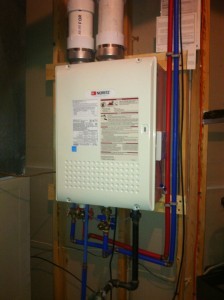
Choosing the tankless route for your family’s water heating needs surely comes with all sorts of benefits--like cutting down on resources, saving your monthly bill and eliminating excess waste--but it also comes with its own unique maintenance and management. While known for saving homeowners money because they’re not constantly running and reheating mass amounts of water, tankless models save energy because they only fire up when needed.
Tankless water heaters thus tend to outlast outdated and oversized models because they are compact, convenient and efficient. But tankless water heaters that are gas fired can also have their own issues if not installed properly, like failing to live up to their intended lifespan because of poor venting. Venting a tankless water heater according to the manufacturer’s instructions is essential to the installation process for the water heater to function at length and effectively, and most importantly, to avoid any chance of danger and the risk of carbon monoxide poisoning.
Tankless water heaters allow for either horizontal venting (out a side wall) or up through the roof. Because tankless water heaters require PVC or special stainless steel piping as the vent material (which is much more expensive than copper, PEX or CPVC), a short venting run is better for both the heater itself, as well as your savings, so many homeowners choose to move the location of their heater closer to an outside wall and run water lines to it instead. The Category III AL29-4C stainless steel is necessary because the combustion efficiency of the heater is likely to create a highly acidic condensate that destroys your standard vent material in just short amounts of time. The special stainless steel venting material also helps to withstand the positive pressure created by the system.
Sticking to the guidelines set out in the manufacturer's instructions will ensure you get the most out of your tankless water heater, saving you time, energy and money with every use. Venting your tankless water heater properly the first time around works to eliminate the possibility of inefficiency and risk, when dealing with something as serious as gas and carbon monoxide. Extra attention spent in the proper installation of your venting saves you the worry later, knowing your tankless water heater is draining condensate and expelling gasses safely.
Over time, all water heaters, be they storage tank- or tankless-type, inevitably build up scale deposits that can decrease their operating efficiency. The rate of scale build-up depends on a given geographic area’s water hardness, but sooner or later, it becomes appropriate to descale any unit. This blog will instruct you on how to a descale a Noritz tankless water heater.
To this end, Noritz has created a simple descaling procedure, outlined below. Although it’s possible for savvy homeowners to follow this themselves, a plumbing contractor should be brought in if there is any hesitation. For a visual explanation, view our video on How to Descale a Noritz Heater.
To descale a tankless water heater, you will need:
Note Before Starting: On the unit, the red isolator valve indicates the hot water side, while the blue isolator valve indicates the cold water side. Drain caps are located on top of the hot side and on the left of the cold side. Turning the valves to the vertical position indicates they are “on” and that water is free flowing. Turning the valves to the perpendicular position indicates they are “off.”
1. Keep the unit on but turn the gas valve off.
2. Turn both hot and cold valves off. Remove the drain caps on both valves. Place the five-gallon bucket underneath the hot water side. Carefully turn the red drain valve to the “on” position and use the bucket to drain the unit of excess water still inside.
3. Repeat step two on the cold water side.
4. Connect a hose to the submersible pump and place the pump with the connected hose into the five-gallon bucket. Make sure the power cord stays out of the bucket.
5. Connect the pump outlet hose to the cold water drain valve.
6. Connect a drain hose to the hot water drain valve and place the end of the drain hose into the bucket.
7. Pour between three and four gallons of vinegar into the bucket so that the pump is completely submerged. Open both drain valve lever handles on the isolation valves and turn on the pump for at least an hour. For maximum effectiveness, change the vinegar solution after 30 minutes and repeat. The unit will try to fire up, but will fail due to the gas being off. Eventually, an error code 11 will appear, which is normal during the procedure. DO NOT RESET.
8. After a minimum of one hour, turn the pump off and close the cold water drain valve. Remove the hose from the cold water drain valve and replace the cap onto the drain valve outlet.
9. Remove the pump and drain hose from the bucket and drain the liquid. Place the hot water drain hose back into the empty bucket and open the cold water main valve. This procedure will flush out the heater with fresh cold water. Flush for at least five minutes or until 20 gallons of water have passed through the heater.
10. For condensing units, place a bucket under the unit and twist open the drain cock located directly under the water heater to drain out any descaling medium that may have collected in the unit. Turn the main inlet valve to the “OFF” position.
11. For additional maintenance, unscrew and remove the water filter for cleaning—some water may flow out. Clean the filter under running water to remove any debris. Place the dry filter back into the port, making sure it’s twisted tightly by hand.
12. Turn the drain valve to the “OFF” position. Unscrew and remove the drain hose. Replace the drain cap and make sure it’s screwed on tightly.
13. Turn the main hot and cold valves back to the “ON” position and turn the gas supply back on. To get rid of the error code 11 that resulted from descaling, reset the unit by powering it off, then powering it on again.
See this descaling guide for more step-by-step information on the process.
Although Noritz builds its water heaters to the highest standards, from time to time you might get an error code on your unit. “These codes can diagnose problems that otherwise might remain unnoticed until unit failure, thus saving on repair and replacement costs,” says Randy Oshiro, Assistant Manager of Engineering at Noritz. However, the error codes’ meaning may not always be clear to a homeowner.
For that reason, we’ve constructed the following helpful outline of the seven most common error codes and their resolutions. Some resolutions are simpler than others, but you should always err on the side of caution and contact a licensed contractor.

This indicates ignition failure in your tankless water heater. It means that your unit is not firing up to heat the water, a situation that can be caused by insufficient gas supply, insufficient airflow or debris on the ignition plug.
After checking to see if the gas is turned on, call a licensed contractor. He or she will make sure your gas valve is open, the exhaust vent is unobstructed and the ignition plug is firmly attached and free of debris.
A code 12 means the unit has a weak flame and that water is not being heated properly. Similar to a code 11, this is caused by lack of gas or airflow.
Call your licensed contractor who will likely take similar steps as outlined for code 11.
A sharp spike in outlet water temperature will cause a code 16. This often results from scale buildup, which hampers heat-transfer efficiency and makes the unit try to compensate by burning hotter.
Since this error can be caused by scale buildup or hard water, performing a descaling procedure or using a water softener may resolve it. Contact your licensed contractor to make sure this is the case.
This code indicates a problem with condensate drainage. In condensing tankless water heaters, a special drain line equipped with a neutralizer (to reduce the acidity of the outflow) removes the condensate. A blockage in the condensate drain line or incorrect condensate drain piping would cause the burner to flood if not for this error code.
Call your licensed contractor, and he or she will check to make sure the condensate drain line is properly routed and unobstructed.
Improper circuit board settings will cause a code 73 error. Changing a jumper connection or dip switch while power is supplied to the heater can trigger the problem, as can an improperly programmed circuit board.
Unplug the heater for 30 seconds and then plug it back in. If the error code persists, call a licensed contractor.
This error code involves a breakdown in communication between two tankless water heaters using the Quick Connect Cord. It can occur when more than one remote is hooked up to handle two Quick-Connected units.
Make sure that only one remote control is hooked up when two units are connected. If the error continues, contact a licensed contractor.
A code 90 indicates a combustion abnormality caused by an improper mixture of air and fuel. Possible culprits are insufficient gas supply, a blockage in the fuel vent or debris in the fan motor.
You will need a licensed contractor to resolve this error. He or she will check gas pressures, venting length, dip switches, etc.
For help with finding a licensed contractor to fix these various error codes, please use the Noritz Find a Service Rep tool.
How to Perform Tankless Water Heater Internal Maintenance
If you have installed a Noritz tankless water heater, then you know the convenience and water-saving benefits it yields by providing hot water on demand for your clients. To keep that hot water flowing at the correct temperature, however, they need to know to call you back to perform regular maintenance every two to three years.

In this post, we will look at how to perform tankless water heater internal maintenance.
The tankless unit has now been serviced and is ready to put back together. All maintenance info can be found in your Noritz homeowner’s guide.
To view video instructions for this maintenance process, please click here.
Tips for Performing Tankless Water Heater External Maintenance
If you own a Noritz tankless water heater, you know the convenience and water-saving benefits it yields by providing hot water on demand. To keep that hot water flowing as long as possible, it is important to perform regular tankless water heater external maintenance.
In this post, we will look at how to perform external maintenance of your tankless water heater. The following is based on an instructional video called How to Perform Noritz Periodic Maintenance.
