
Enter Valid Zip.


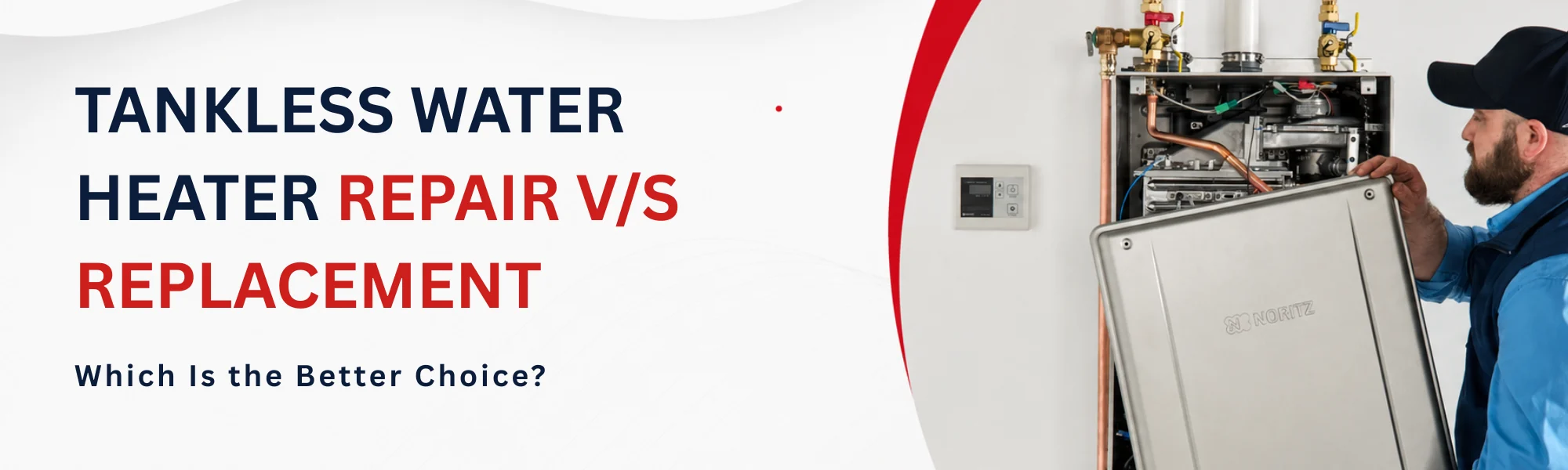
When a tankless water heater starts experiencing performance issues, homeowners often face a common question: Should I repair my tankless water heater or replace it entirely?
The answer depends on several factors, including the age of the unit, repair costs, maintenance history, energy efficiency, and long-term reliability. While many issues can be resolved through professional repairs, there are situations where replacement may provide better value and peace of mind.
This guide will help you evaluate both options and determine the most cost-effective solution for your home.
Before deciding between repair and replacement, it's important to identify the actual cause of the problem.
Common issues include:
Many of these issues can be diagnosed through a systematic troubleshooting process.
Before making a replacement decision, review our guide on How to Troubleshoot a Tankless Water Heater and our article on Why Is My Tankless Water Heater Not Producing Hot Water?.
In many situations, repairing your tankless water heater is the most practical option.
Consider Repair If:
The Unit Is Relatively New
Most high-quality tankless water heaters are designed for long service lives. If your unit is still within its expected lifespan, repairs are often worthwhile.
The Problem Is Minor
Issues such as:
can typically be resolved without major expense.
The Unit Has Been Well Maintained
Regular flushing, descaling, and professional servicing can significantly extend equipment life and reduce repair costs.
Warranty Coverage Is Available
If your system remains under warranty, repair costs may be substantially reduced.
You can review coverage details on the Noritz Warranty Information page.
While repairs can often restore performance, there are situations where replacement becomes the more economical long-term solution.
Frequent Breakdowns
If your unit requires repeated service calls, repair expenses can quickly add up. Warning signs include:
Increasing Repair Costs
If major components require replacement, homeowners should compare repair expenses against the benefits of upgrading to a newer system.
Declining Efficiency
Older units may operate less efficiently than modern models, resulting in higher energy costs over time.
Significant Heat Exchanger Damage
The heat exchanger is one of the most important components of a tankless water heater. Extensive damage can make replacement more practical than repair.
Many common performance issues are actually maintenance-related.
Regular maintenance can often restore performance without requiring major repairs.
Learn more about common diagnostics in our guide on Tankless Water Heater Error Codes Explained.
Modern tankless water heaters offer significant improvements in technology, efficiency, and diagnostics.
Advantages of Upgrading Include:
Improved Energy Efficiency: Newer models are designed to maximize fuel utilization while reducing operating costs.
Advanced Diagnostics: Built-in diagnostic systems make troubleshooting easier and help identify potential issues earlier.
Enhanced Reliability: New technology can reduce downtime and improve long-term performance.
Simplified Installation: Many modern systems are designed to streamline replacement projects and reduce installation complexity.
The Noritz EZ Series PRO offers advanced features including simplified installation, enhanced diagnostics, Bluetooth® connectivity, and exceptional energy efficiency.
When evaluating repair costs, it's important to consider more than the immediate expense.
Ask yourself:
In many cases, investing in a newer, high-efficiency system can provide better long-term value than repeatedly repairing an aging unit.
Whether you're considering repair or replacement, professional evaluation is the best way to understand the condition of your system.
A qualified technician can:
Use the Noritz Contractor Finder to locate a trained professional in your area.
Minor issues on newer units can often be repaired cost-effectively. Older systems with recurring problems may benefit from replacement.
Service life varies depending on maintenance, water quality, and usage patterns. Regular maintenance helps maximize lifespan.
Major components such as heat exchangers, control boards, and gas valves are typically among the more significant repair expenses.
Yes. Mineral buildup can reduce efficiency, affect water flow, trigger error codes, and impact overall performance.
Frequent repairs, declining efficiency, major component failures, and increasing maintenance costs are all indicators that replacement may provide better value.
Modern systems often include improved efficiency, advanced diagnostics, enhanced controls, and upgraded performance features compared to older models.