NORITZ BLOG

Get the latest in Noritz news and announcements.

  • 23 MarAre You Ready for NAECA 2015 Changes (Demo)

  • DID YOU KNOW: Some of the biggest changes to hit the water heating industry in years are just around the corner?

    A higher Energy Factor (EF) will soon be required for all residential storage tank-type, gas, electric and oil water heaters. Sure, government mandates like these happen from time to time, but this time the changes will directly impact water heating selection and installation.

    Just how well prepared is the industry for these pending changes, which take effect next month? A large trade magazine publisher in the field, BNP Media’s Plumbing Group, recently polled its plumbing wholesaler and contractor readers and found varied levels of awareness and preparedness.

    The bottom line? If those who sell and install water heaters every day for a living feel they need more information and education, it’s obvious that everyone else in the distribution chain does too — including builders and remodelers.

    Here is what you need to know:

    What is NAECA? The new mandates of the National Appliance Energy Conservation Act (NAECA) go into effect April 16th and will drive change for a good reason.

    According to the Office of Energy Efficiency & Renewable Energy (EERE), the latest standards to become effective for 2015 project approximately $63 billion in energy bill savings for products shipped over a 30-year period, from 2015-2044.

    While these standards play a major role in the efforts to save energy, there will be obvious challenges for the installation of residential water heaters in replacement situations; specifically, those that involve storage tank-type units.

    Why? Because manufacturer compliance with NAECA regulations will necessitate product-design changes. These changes, in turn, will require more installation space in both single-family and multi-family dwellings.

    Under the new regulations, tank-type water heaters must use more insulation to stay in line with these new energy mandates. Tank-type water heaters under 55 gallons will be an additional two inches taller and two inches wider. That is, they will take up more space. Since many water heaters are situated in places — garages, basements, closets, attics — that cannot afford to give any more space, that could be a big problem when it comes time to replace them.

    The following two tables outlines the changes in EF standards for common sizes of tank-type water heaters:


    Gas Tank-TypeWater Heater(Energy Factor Changes) 20-55 Gallons Greater than 55 Gallons
    Rated Storage Volume 30 40 50 60 65 75
    Current Standard (EF) 0.61 0.59 0.58 0.56 0.55 0.53
    New 2015 Standard (EF) 0.63 0.62 0.60 0.75 0.75 0.74


    Electric Tank-Type Water Heater(Energy Factor Changes) 20-55 Gallons Greater than 55 Gallons
    Rated Storage Volume 20 30 40 50 65 80 120
    Current Standard (EF) 0.94 0.93 0.92 0.90 0.88 0.86 0.81
    New 2015 Standard (EF) 0.95 0.95 0.95 0.95 1.98 1.97 1.92


    For gas-fired products over 55 gallons, fully condensing combustion technology will be required. Similarly, all residential electric models over 55 gallons must use hybrid electric heat pump water heater technology.

    Impact on tankless? Fortunately, tankless technology already meets and exceeds the demands of the new NAECA guidelines. The average EF of most tankless water heaters is already 20 to 30 points above that of a standard, tank-type water heater. In addition, tankless units are wall-hung, meaning that they will easily fit into tight spaces that cannot accommodate the new and larger tank water heaters.

    Using tankless water heaters in new and existing home applications will ensure that the NAECA guidelines will be met with ease, both now and in the future. What’s more, the latest solution from Noritz makes it easier and more cost-effective in tankless-for-tank replacement situations. The new Noritz EZTR40 Tankless Water Heater is able to meet the needs of an entire household that is currently using a 40-gallon storage-type water heater.

    Noritz University has even created an online course for tradespeople interested in learning about this new, innovative solution. Be sure to check out: https://training.noritz.com/.

    For more information on tankless waters and the EZTR40, please visit us at https://www.noritz.com/eztr.

  • 12 MarPros and Cons of Hydronic Radiant Floor Heating (Demo)

  • Radiant Floor Heating

    Hydronic is the most efficient form of radiant floor heating, but does it have any drawbacks? Check out this complete pro and con list and find out for yourself.

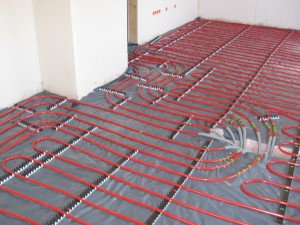
    Radiant floor heating (RFH) is a system where the floor itself is heated and serves as the heat source for your home. There are two kinds of RFH: electric and hydronic. Hydronic is by far the more efficient, and has been getting a great deal of interest for that reason. Even so, many homeowners aren’t sure which is the best way to go. So is hydronic worth it? Here are the complete pros and cons:

    Pros

    • Extremely efficient. Electric RFH may feel just as nice as hydronic, but hydronic is by far the cheaper one to run. Electric heating is not efficient especially over large areas. If you simply wanted a heated floor in one room, like a bathroom, then electric might be fine; but if you want to heat your house you’ll come out ahead by going with a hydronic RFH system.
    • Long lasting. There are few home utilities that last as long as a hydronic RFH heating system. This is partly because of how they’re designed and partly because they’re so efficient, which in itself puts less wear and tear on the system. A good hydronic RFH system can last 40 years or longer.
    • Interfaces with tankless water heating. One of the best features of hydronic RFH is that is can interface with a tankless water heater system. After all, both devices essentially heat water while it’s in the pipes and circulate it through the house. Since tankless water heating is itself a money saver, combining the two systems means even lower energy bills than using just one or the other.

    Cons

    • Works best in new construction. Bear in mind that installing hydronic RFH means laying a series of tubes down underneath the flooring. This is easy to do with new construction, but it can be harder to do in an existing home because of the added expense of tearing up existing floors. However, hydronic RFH can be a good choice if you’re remodeling and will have the floor up anyway.
    • Higher up-front cost. There is no question that the up front cost of hydronic RFH is higher than that of a traditional furnace system. However, the energy savings will offset this over time, particularly if combined with a tankless water heater.

    Are you considering hydronic radiant floor heating? What are the biggest factors affecting your decision?

  • 5 MarEZTR40 Equals Easy Tankless Water Heater Installation

  • There’s no hiding that we’re incredibly proud of our new EZTR40 tankless water heater.

    It features top mounted connections that provide an intuitive and straightforward tankless water heater installation.

    But, as the old saying goes, seeing is believing. See the installation for yourself and just how fast the process can be with this quick video.

  • 25 FebWhy Noritz For Your Tankless Water Heater Needs? (Demo)

  • Great question. Let us count the ways!

    Serving both homeowners & commercial users across the U.S. and Canada, we offer a large range of tankless gas water heaters to meet the varying needs of our customers. Here are just a few of the benefits that come alone with a Noritz tankless water heater.

    • Installation versatility: Compact design and easy venting permit convenient placement almost anywhere indoors. Outdoor models for warmer climates can be installed on home or garage exteriors.
    • Manufacturing excellence: We own all aspects of the manufacturing process, assuring the highest quality materials and components, built to exacting, just-in-time procedures.
    • Installed by plumbing professionals: Noritz partners with a nationwide network of professional plumbing installers that have been fully trained and certified in the sale and installation of our products.
    • Responsive customer service: All Noritz service reps are certified tankless water heater specialists and can assist with any aspect of installation and servicing.

    The process starts at Nortiz.com. Take a look:

  • 29 JanHow Tankless Water Heaters Deliver Comfort (Demo)

  • EZTR40 Tankless Water Heater

    Few things are more annoying in life than that unpleasant feeling you get when the hot-water supply runs out during a shower. That cold blast makes you wish for a way to enjoy hot water on demand. Fortunately, a tankless water heater can easily grant your wish.

    Tankless heaters provide hot water only when needed — “on demand” — rather than storing and continually reheating water in a tank in anticipation of demand. Americans have become so accustomed to storage tank-type water heaters, which have been around for roughly a century, many remain unaware of how their tankless counterparts work or their energy- and space-saving advantages.

    First some basics. Tankless water heaters know exactly when to turn on and off. A flow sensor detects an open faucet, shower or washer, igniting the burner inside the tankless unit. The burner heats the water until you turn the fitting or appliance off, at which point the burner immediately stops. Tank-type water heaters, on the other hand, expend energy 24/7, continually heating and reheating water to a set temperature, even when you aren’t home.

    With energy ratings in excess of 80 percent, tankless units are 20 percentage points more energy-efficient than conventional tank-type water heaters, leading to savings on energy bills every month. By eliminating a giant tank, wall-hung tankless units also save on space. Finally, tankless avoids the buildup of mineral deposits over time at the bottom of a storage tank, while also eliminating the nightmare scenario of a tank bursting and flooding the floor.

    Condensing tankless water heaters, a “step-up” from regular tankless units, boost efficiency further by utilizing a secondary heat exchanger to capture additional heat from the combustion gases before they escape up the flue.  Condensing heaters use this extra heat to preheat incoming cold water, resulting in efficiency ratings over 90 percent.

    Either type of tankless water heater saves money, space and personal comfort over the long run, ultimately delivering a payback on your investment. Noritz tankless water heaters are backed with a 12-year warranty, or roughly double that of a standard tank unit. What’s more, recent advancements have narrowed the installed-cost gap between tank and tankless, meaning it’s becoming more affordable than ever to enjoy hot water on demand.

    With tankless, you’ll be able to take shower after shower without any chilly surprises — in the shower or in the mail.

  • 15 JanVisit us at IBS 2015 Las Vegas! (Demo)

  • Noritz IBS 2015

    We’re heading to The International Builders’ Show January 20 to 22! Come and visit us in booth C8322 and see first-hand how you could benefit from installing a tankless water heater. Here are a few highlights you can expect to see in our booth at  IBS 2015 Las Vegas:


    • The NEW EZTR40: Come and see how we’re revolutionizing the tankless industry with our EZTR. Featuring a revolutionary new venting style that utilizes 2”flexible polypropylene vent to run through existing B-vent. It also has top mount connections that provide an intuitive and straightforward install, the EZTR40 lets you get the job done fast, easy and smart.
    • The NEW NRCP: The ENERGY STAR-qualified NRCP98-DV and the NRCP1112-DV, with an Energy Factor of 0.95, use a built-in pump to circulate hot water on demand, eliminating long waits at the shower and the wasting of water and energy down the drain.


    Don’t forget to head over to one of our iPad Stations located in our booth for your chance to win a 70” Vizio Smart TV. Flip through our product selection, take our survey and more!


    We hope to see you on the show floor at IBS 2015 Las Vegas!

  • 8 JanUnderstanding the NRCP line of tankless water heaters (Demo)

  • Noritz-NRCP

    Whether it’s enjoying a warm drink, bundling up by a fire or taking a hot shower after some serious snow shoveling, this is the time of the year when warming up is most important to us.

    Certainly, the last thing anyone wants is to be left out in the cold. Think about it: What if there was a way to eliminate those long, awful waits for hot water at the shower, while at the same time avoid wasting water and energy down the drain? Well, Noritz has the answer…

    The new NRCP line of residential tankless water heaters from Noritz America combines the high efficiency of condensing technology with the comfort and savings of on-demand, hot-water recirculation.

    The digital display on the front of the water heater allows homeowners to program the recirculation system to operate only when needed, with precision down to the hour. An alternative auto setting lets the system learn a household’s water-usage routines and automatically allow for immediate hot water when it is needed the most.

    How do these two concepts work together? Let’s find out!


    1. Recirculation:

    A circulating pump inside the water heater keeps hot water close to the outlet — such as a shower head — minimizing the wait and, therefore, the waste of unused potable water down the drain. Saving water, in this case, is doubly beneficial, because recirculation also avoids wasting the energy used to heat that water.

            2. Condensing Technology:

    Similar to conventional tankless water heaters, condensing models save energy and protect the environment by heating water strictly on demand; i.e., only when the faucet, shower or appliance is turned on. These units require no standing pilot light and no storage, permitting substantial energy savings because there’s no wasteful reheating of stored water, as with traditional storage-type heaters.

    A condensing water heater has not one, but two, heat exchangers: a primary exchanger to heat the water moving through it; and a secondary exchanger to draw heat from the warm gases going up the flue — the by-products of the water heater’s combustion process. This secondary device uses the heat from the combustion gases to preheat incoming cold water on its way to the primary heat exchanger. Squeezing more heat from the departing flue gases is what boosts the unit’s efficiency rating to more than 90 percent.

    That’s why the Noritz NRCP98-DV and the NRCP1112-DV have Energy Factors that are more than 10 points higher than that of a comparably sized, conventional tankless unit, and approximately 30 points higher than a standard, tank-type, gas-fired water heater.

    So, not only are you improving your showering experience, but you also get enhanced energy- and cost-saving benefits by going with tankless.

    For more information about the NRCP Condensing Tankless Water Heater, please visit www.noritz.com.

  • 18 DecNoritz Road Trip: Q&A (Demo)

  • Over the last two months our Road Trip team has been hard at work, travelling from coast to coast and visiting Noritz wholesalers and installers to talk about our brand new

    EZTR. We caught up with the team leads, Kevin Tague & Lance Bailey to ask them a few Q’s about their time on the road. Check it out:

    Noritz Road Trip

    1. What was the most common question you received about the product?

    L: Most common questions were a mix of venting applications and installing specifics.

    K:  The most common question I got on the road was “How much?” We have no set pricing yet but pricing ranges that we did run by our installers seemed in line with their expectations considering the entire EZTR40 unit includes venting, isolation valves, and vent attachments for the unit and on the roof.
     
    Noritz Road Trip
     

    1. How was life on the road?

     
    L: Life on the road was fast. Honestly, the two months that I was out seemed to fly by, and now it’s almost Christmas! The organizers of the road trip and our sales team did an amazing job of making my life on the road as easy as possible.
     
    K: Life on the road was different! It was exciting to see the new places and talk with new people every day.
     

    1. What was your favorite city to visit and why?

     
    L:  I had a great time in Sarasota, FL. going to Siesta Key, etc.
     
    K: I really liked the trip out to Arizona. I met and got to do events with our rep R&G Sales. They are a great group. It was also the right time of year, sunny and 80 degrees out every day. That was lucky.
     

    1. What are some of the responses you are getting on the new EZTR from installers and contractors?

     
    L: Many are excited to try it and were asking when it would be available. Even though this is a smaller size to use the existing gas line, many plumbers are asking for larger capacities with the same venting system.
     
    K: The main response we have gotten from installers have been things like:

    • “That’s easy”
    • “Why didn't anyone think of this sooner?”
    • “It's about time you make it easier for us!”
    • “We are ready to put in a few now.”

     
    Noritz Road Trip
     

    1. What are some of the key EZTR features you feel are important for installers to know?

     
    L: That it is meant to fill a particular need, namely a tankless unit that is affordable for an average homeowner. The EZTR is not a solution to every tankless installation; rather it is a unit for tank replacements where utilizing the existing vent will save time and money. The rest of the Noritz line, such as the condensing units and/or outdoor units are still available for many applications.
     
    K: The three main features that will save the installers a lot of time on the installation:
    - Top mounted water connections
    - Existing 1/2" gas line
    - Using the existing venting as our sleeve.
     
     
    To learn more about the Noritz Road Trip, visit our Facebook page.
     
    Noritz Road Trip

  • 18 DecNoritz Road Trip: Q&A (Demo)

  • Over the last two months our Road Trip team has been hard at work, travelling from coast to coast and visiting Noritz wholesalers and installers to talk about our brand new

    EZTR. We caught up with the team leads, Kevin Tague & Lance Bailey to ask them a few Q’s about their time on the road. Check it out:

    Noritz Road Trip

    1. What was the most common question you received about the product?

    L: Most common questions were a mix of venting applications and installing specifics.

    K:  The most common question I got on the road was “How much?” We have no set pricing yet but pricing ranges that we did run by our installers seemed in line with their expectations considering the entire EZTR40 unit includes venting, isolation valves, and vent attachments for the unit and on the roof.

    Noritz Road Trip

    1. How was life on the road?

    L: Life on the road was fast. Honestly, the two months that I was out seemed to fly by, and now it’s almost Christmas! The organizers of the road trip and our sales team did an amazing job of making my life on the road as easy as possible.

    K: Life on the road was different! It was exciting to see the new places and talk with new people every day.

    1. What was your favorite city to visit and why?

    L:  I had a great time in Sarasota, FL. going to Siesta Key, etc.

    K: I really liked the trip out to Arizona. I met and got to do events with our rep R&G Sales. They are a great group. It was also the right time of year, sunny and 80 degrees out every day. That was lucky.

    1. What are some of the responses you are getting on the new EZTR from installers and contractors?

    L: Many are excited to try it and were asking when it would be available. Even though this is a smaller size to use the existing gas line, many plumbers are asking for larger capacities with the same venting system.

    K: The main response we have gotten from installers have been things like:

    • “That’s easy”
    • “Why didn't anyone think of this sooner?”
    • “It's about time you make it easier for us!”
    • “We are ready to put in a few now.”


    Noritz Road Trip


    1. What are some of the key EZTR features you feel are important for installers to know?


    L: That it is meant to fill a particular need, namely a tankless unit that is affordable for an average homeowner. The EZTR is not a solution to every tankless installation; rather it is a unit for tank replacements where utilizing the existing vent will save time and money. The rest of the Noritz line, such as the condensing units and/or outdoor units are still available for many applications.


    K: The three main features that will save the installers a lot of time on the installation:

    - Top mounted water connections

    - Existing 1/2" gas line

    - Using the existing venting as our sleeve.


    To learn more about the Noritz Road Trip, visit our Facebook page.


    Noritz Road Trip

  • 9 DecThe Benefits Of Using A Tankless Water Heater (Demo)

  • Tankless Water Heater EZTR

    The National Appliance Energy Conservation Act (NAECA) will require higher Efficiency Factor ratings on all storage tank-type water heater units, increasing space requirements and raising the cost for homeowners.

    Replacing your current tank-type water heater may soon bring bigger installation headaches—and higher costs—than in the past, thanks to pending federally mandated energy-efficiency requirements.


    As a part of the National Appliance Energy Conservation Act (NAECA) from the U.S. Department of Energy (DOE), a new update will require a higher Energy Factor (EF) rating on almost all tank-type, residential gas, electric, oil and water heaters. The new regulations will become effective on April 16, 2015,


    These standards will play a major role in efforts to save energy nationwide, helping people save money and reduce carbon pollution, ensuring that we are working towards an energy-stable future. But the changes will bring certain challenges for installers of storage-tank water heaters and their customers.


    What does this mean?


    Under these new energy efficiency regulations, tank-type water heaters will be significantly larger and will therefore take up more space in areas of the home in which space is already limited; e.g., basement mechanical areas, garages, attics, utility closets, etc. For example, gas water heaters under 55 gallons will be an additional 2 inches taller and 2 inches wider in diameter.


    Homes that use a closet to house a water heater, as well as apartment and condo applications, are especially vulnerable to these dimensional changes.


    In a water heater-replacement scenario where space is a concern, sticking with the tank-type water heater route may result in having to use a model with a smaller storage capacity, or one with both less capacity and a larger physical size than the unit that is currently in place. In either case, the homeowner will have less hot water for daily cleaning and washing activities.


    The perfect solution…


    The bottom line is that energy efficiency is becoming increasingly important in all aspects of our daily lives, and we need to consider what we can do to live greener. If you think you’ll need to replace your water heater soon, tankless is the perfect solution.

    Space for a water heater may be limited in your home, whether it’s in your closet, garage or basement. The great thing about tankless technology is that it already incorporates the demands of the new NAECA guidelines. The average EF of most tankless water heaters is already 20 to 30 points above that of a standard, tank-type water heater, and the units are wall-hung, meaning that they will readily fit into tight spaces that cannot accommodate the new and larger tank water heaters.


    Doing a tankless-for-tank change-out can present its own special complications, of course. But Noritz recently unveiled a much easier and more cost-effective way to make such a change-out.


    The new Noritz EZTR40 Residential Tankless Water Heater is engineered to replace any 40-Gal. tank-type water heater, handling the hot-water needs of the entire household.


    With new features that make the tank-replacement job more intuitive and straightforward, homeowners get the benefits of time savings and installation ease with all the energy- and space-saving advantages of tankless.


    For more information on tankless water with the EZTR40, please visit www.noritz.com.


Find an Installer
Enter Valid Zip.
GO!

Are you looking to purchase, install, replace or repair a water heater?

Find an Installer

Find a local Noritz Installer.
Check reviews. Get quotes

Find a Servicer

Find a local Noritz Servicer.
Check reviews. Get quotes

Proceed to Website

Proceed to the rest of the website

*Noritz products should only be purchased through a plumbing professional