
Enter Valid Zip.


Ready to have full access to Noritz offerings and information? The upgraded Support & Parts Website from Noritz America has everything you need for your residential and commercial projects, with all the information readily available at any time.
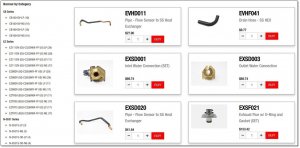
For fast information on a product, simply begin to enter a model or a part number. If you are unsure of the full number, the built-in suggested search will assist with filling in the blanks.
Still unsure which part is needed for your tankless water heater? Once the results appear, you can easily sift through 1,500 different Noritz parts available for order. Selecting a specific part will also provide ready access to other vital information, such as “technical literature,” “tankless diagram,” and “technical specs.” These options will help viewers fully understand a water heater’s schematics, as well as its location and role in a tankless water heating system.
Before the new Support and Parts website, Noritz tankless water heater parts had to be purchased by phone. But the days of remaining on-hold and waiting to speak to the correct representative are long gone.
With the improved website, U.S. homeowners and contractors can now easily order Noritz parts through their smartphones. After finding the best solution, simply select how many units you would like to purchase and hit “BUY” to add them to your cart. If a part has been discontinued, the new site will inform you and suggest a replacement.
Quick tip: All verified Noritz PROCard members can create an account with us to receive discounted pricing on Noritz parts and personalized support from our experts! Sign up here.
● Technical documents: Click this button to find accessible support documents and warranty information.
● Product information: This section will deliver general and technical information regarding your tankless water heater of choice.
● Knowledge base: This Noritz customer go-to delivers FAQs and details on troubleshooting.
● Catalogs: You can quickly view our product guides, commercial catalog, and business catalog through the new website.
● Case studies and videos: Learn about real-world, residential and commercial applications for Noritz tankless water heaters and their parts.
● Service and live technical support: View additional resources and reach out to a Noritz expert for any remaining questions you may have!
The new Noritz Parts and Support website is yet another expression of the Noritz “EZ” philosophy and mission to always make the customer experience easier and more convenient. Check out the new Support and Parts site today!
During early February, certain parts of the country suffered an unprecedented deep freeze — weather that has never been seen before in much of the South. In Texas, the extreme conditions caused state-wide emergencies, such as icy roads, blackouts, water outages, and boil-water orders. Many homes and buildings were ill-equipped to handle the icy temperatures. As a result, local plumbers have been working overtime to get systems back in order.
Tankless water heaters are no exception to the list of systems that can be severely impacted by the cold. Fortunately, there are precautions that you can take to mitigate, if not eliminate, the problems.
Winterizing your tankless water heater can help minimize adverse reactions if and when Mother Nature strikes again.
Because of times like these, tankless water heaters should be installed in a warm place, especially if the area is prone to extreme winter weather. A heated space such as a garage or basement can help prevent any freezing from occurring.
What if indoor placement is not possible? Ideally, install units on an indoor wall by positioning your outdoor water heater on the walls alongside a heated indoor space rather than facing open air. This can help decrease the likelihood of freezing. Noritz’s tankless water heater manual specifies the air temperature around indoor units should not drop below 32F, and there should not be a negative pressure in the room.
Another option is to utilize vent terminations. A proper vent termination kit will provide a barrier against winds and can minimize potential wind chill entering, and ultimately freezing, the unit. When applying, locate the venting systems away from incoming wind chills. Explore our tankless water heater venting accessories here.
Insulation can offer an added layer of protection for your tankless water heater as well as your plumbing pipes which are extremely susceptible to freezing during frigid temperatures. Fiberglass and heat tape are both excellent options.
Heat tape specifically comes in many different types and materials, so you are able to find the best suited for your winterizing needs. Applying the tape on pipes connected to the water heater can ensure the water being carried to and from your unit does not freeze. Keep in mind though, while heat tape is great for protecting other water pipes outside of the unit, it also only works when there is power.
As mentioned above, maintaining a consistent power source will come in handy when freeze protection is needed. But what about when homes and businesses lose power, as happened with disastrous consequences in Texas?
Having a battery backup on hand is vital, especially if your area is prone to power outages. When temperatures are near dangerously cold, the system will begin operating (whether your tankless unit is on or not) and provide warmth to vital parts of your water heater.
Some tankless water heaters offer freeze-protection capabilities, such as Noritz tankless units fitted with built-in electric heaters. With these heaters, placing your system near a power source makes it easy to keep it plugged in, so that the freeze protection will kick in if necessary. Battery backups allow the unit to run the freeze prevention for a limited amount of time (20 minutes to an hour, depending on size of battery backup).
If frequent power outages of only a few minutes are common, then a battery backup makes sense. Otherwise, longer power outages of hours or days should be addressed with a gas generator which has the added benefit of allowing the use of other electronic devices during that time. A gas generator would keep the tankless powered up as well as any heat trace installed on the plumbing.
Even the smallest puddle of excess water residing in your tankless system can freeze. Ice inside the unit can damage internal components, most commonly the ones made of plastic. Standing water needs to be drained ahead of inclement weather as a precautionary measure.
By using the hot- and cold-water line valves, the water can be isolated to the water heater itself. The ability to do this depends if the unit was installed with water shut-off valves underneath it or not. When in doubt, refer to your Noritz tankless water heater owner’s manual for additional freeze prevention steps including draining the unit.
Installing solenoid valves can make draining water even easier. The valves have an extremely quick response time and will self-drain internal water when the power source shuts off. Again, if power outages are common where you live, installing solenoid valves is a good option to consider.
If you need assistance with your tankless water heater or preparing for winter weather, please contact the Noritz technical department here.
Before a contractor begins installation of a new commercial water heater, he must answer a number of critical questions, such as the best type of water heater and the number of units needed to meet the building’s hot-water needs. With the upgraded Noritz commercial calculator, critical project details like these can be easily recommended in just a few quick steps — all at your fingertips. The calculator serves as an excellent reference point for getting estimates of initial water heater information.
Our new and improved commercial calculator is compatible with all web browsers, and is mobile-friendly for those who bring the calculator on the job. With simplified features, an updated look, and improved APIs, the calculator is now smarter and, as a result, more user-friendly.
The calculator serves as a commercial water heater project guide without the need for much prior knowledge. You can explore the new calculator here.
1. The calculator requests various inputs from the user: type of job, zip code, location of the heater (inside or outside), and what type of gas will be used.
2. The calculator then uses this information to automatically recommend a type of tankless water heater and/or suggest a certain number of tankless units to meet the project’s specific demand.
3. The basic information is readily available for the user. When further questions arise, the calculator provides a way to contact Noritz directly, as well as an opportunity for users to enter their contact information.
The program is easy to use, with many of the inputs being auto-populated. Once initial information is entered, corresponding fields will be automatically updated. However, they can be adjusted manually as well.
What if the job’s location is the only known information? No need to worry! For example, the groundwater temperature, a field that is commonly unknown, can be computed by simply entering the correct zip code. The groundwater temperature field will auto-populate to the correct area temperature. In addition, the area elevation will automatically be updated.
Both of these factors are new additions to the calculator and are necessary for selecting the correct size of tankless water heater for the project. Depending on the job site, even a set point temperature can be determined by the calculator.
In the past, a contractor choosing a tankless water heater would first contact Noritz or a local representative for sizing assistance. Next would come price quotes and selecting the accompanying parts and accessories, etc.
The commercial calculator streamlines these steps, which saves time. The installation process can get started faster once the installer has a basic idea of the suggested models, their cost, and questions they may have in advance.
Many know tankless heaters are a great option, but don’t know where to begin. Hesitate no more! Let the commercial calculator be your starting point to help speed and simplify your commercial water heater projects. Head in the right direction with Noritz.
Interested in learning more about the Commercial Calculator? Reach out to an expert at Noritz today!
*The tankless water heater information provided by the commercial calculator serves primarily as a reference point. If special fixtures, requirements or inputs are needed for a specific job, a Noritz expert can offer greater detail on the type and amount of water heaters necessary compared to the use of the commercial calculator itself.
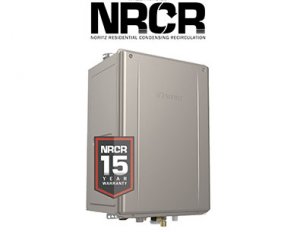
The NRCR Condensing Tankless Water Heater is the flagship model for Noritz’s residential product offering. Regardless of the presence (or lack of) a pre-existing dedicated return line, the NRCR delivers hot water to fixtures throughout the home — instantly — through innovative technology and a recirculation pump built right into the heater. The pump recirculates water through a home’s plumbing system, making sure hot water is readily available for immediate use — as opposed to waiting for the cool water to heat up.
Perhaps you already know about the NRCR and are actively selling and installing it in your local market. But just in case, here are 10 key features of the NRCR Condensing Tankless Water Heater that will be of special interest to your homeowner-customers:
1. No return line? No need
Most homes— between 80% and 90% — do not have a dedicated return line. This means once the water exits the fixture or faucet, it simply goes down the drain. However, with the NRCR, installers can purchase a Noritz crossover valve that allows the cold-water line to function as a return line, bringing water back to the water heater and passing it through to create a loop.
The NRCR has intelligent sensing that (1) turns itself on when only cold water is near an outlet experiencing demand; and (2) turns itself off when hot water is available. This sensing feature enables those many homeowners who lack a dedicated return line to have hot water available at the shower or tap very quickly without extra expense.
2. Easier wiring for remotes
The NRCR’s predecessors needed the weather protective cover on the remote controller terminal removed in order to wire the remote or wifi adapter. It had one screw and was located outside the case. Like the previous version, the new version is also conveniently located outside of the unit with a flip-down hatch. Now, however, the access panel requires no tools, allowing for an easier and faster way for the installer to make necessary connections compared to the previous unit model.
3. Highest efficiency in its category
Compared with competitor models, the NRCR offers the highest efficiency of similar products on the market. This rating is a result of extremely low emissions and a high-efficiency burner. In addition, the built-in recirculation pump allows the NRCR to have hot water instantly available, meaning shortened operating times — a benefit of convenience and comfort that conventional tankless units cannot offer.
4. Bracket for wall placement
An additional new bracket for the NRCR enables the unit to be hung on the wall after it is installed and allows it to slide from left to right. This creates more room for precise adjustments that may be required post-installation.
5. Auto-learning household habits
Once in use, the NRCR offers a homeowner different operating modes, designed to increase functionality and enhance the user experience. Take, for example, the “on-demand recirculation” mode, which is especially suitable for the energy-conscious homeowner who wants to have the most energy-efficient recirculation. When a home lacks a pre-existing recirculation system, this mode can be activated by a simple push of a button.
The NRCR can also be triggered by a motion sensor. When an individual enters a bathroom, the product will activate automatically, immediately putting hot water at the outlets for hand-washing or showering.
The most innovative and impactful mode is “auto-learning.” In just a few days following the tankless heater’s installation, this mode studies and “learns” the hot-water habits of the household: how often the occupants use hot water, what times of day they use it, how much is used, etc. The NRCR’s default mode will then schedule hot-water recirculation around those usage patterns, saving water and energy without sacrificing user comfort.
The auto-learning mode is easy for installers: You don’t have to figure any additional, complex programs. But the mode also makes life easier for your homeowner customers, sparing them from having to make post-installation adjustments to their NRCR water heaters.
6. Swinging board circuit
The NRCR’s circuit board can now easily swing out of the way for users. This feature allows for easy access to internal components.
7. Flushing to maintain performance
A descaling procedure will flush out mineral deposits that have accumulated inside the water heater over time. Similar to an ice machine or a coffee maker, the NRCR can be used with a descaling kit to clean the heat exchanger coils, as well as an acid solution to break down the minerals from hard water.
8. Dynamic descale reminder
A countdown timer was the previous version of the NRCR’s descale reminder. The current unit has a descale reminder that is more dynamic and based on the amount/usual time of use rather than a timed countdown.
9. Steady water temps in hot weather
The NRCR offers an industry-first, offered exclusively by Noritz: the Steady BTU (SBTU) Mode that eliminates concerns over high incoming water temperatures, particularly in warmer regions of the country. If you are a contractor working in the Sunbelt, this is huge news for you and your customers.
Every tankless water heater has a minimum input and a maximum input, measured in BTUs per hour. For the NRCR, the minimum operational input is 18,000 BTU/h.
In warmer months and especially in hotter climates where the ground water remains warm year-round, the input needed to heat the water to the desired temperature can be actually less than the minimum. For example, if the temperature of the incoming water is 90°F, the system will need significantly less than 18,000 BTU/hour to raise that temperature the necessary 10 to 20 degrees to reach the desired setpoint for washing, showering, etc.: usually between 100°F and 120°F
Conventional tankless water heaters have historically struggled to accommodate such sub-minimum energy demands in warmer months of hot-climate areas. The unit may overheat or not activate at all in response to demand. The temperature of the hot water produced may also be unsteady.
In the SBTU Mode, the NRCR’s breakthrough burner-control technology reduces the effective minimum input by more than 70 percent — to under 5,000 BTU per hour. As a result, the hot-water demand is met, while the output temperature of the water remains steady, enhancing the comfort of the homeowner.
10. Fast temperature
The new NRCR model can reach a set temperature faster than ever before. To be more specific, the unit is about 40% faster than the previous generation of product to come to a stable, set temperature!
In sum, this new and highly precise control of the combustion process in the NRCR effectively eliminates a warm-weather issue that has long been a shortcoming of tankless water heaters. Interested in learning more about the NRCR Condensing Tankless Water Heater? Reach out to an expert at Noritz today!
Why does this matter to installers?
At Noritz America we strive to answer your technical questions, so you can get the best value from our tankless water heaters and combination condensing boilers.
Our hope is to provide technical advice and support in a quick and easy format. The Noritz Tech Tip Series aims to solve technical problems and daily issues that arise in the field. This includes installation and maintenance issues, error codes, and other technical difficulties that can impact user experience.
What follows are short overviews of four of our latest Noritz Tech Tip installments, which are available in video format:
Tech Tip 1: Setting up the connections for a Noritz System Controller in commercial installations.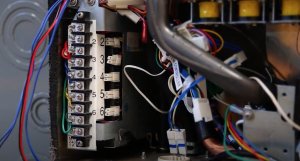
Watch the tech tip video here.
Tech Tip 2: Checking the outlet water temperature on your Noritz unit.
 temperature sitting at the outlet. As you're testing the faucet, the burner light will turn on when the unit has fired up.
Watch the tech tip video here.
Tech Tip 3: How to diagnose and service an error code 11 on your Noritz Tankless Water Heater.
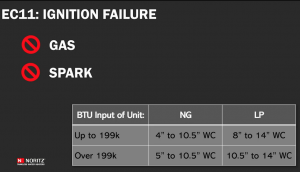 just as it shows on the rating plate of the unit.
Watch the video here.
Tech Tip 4: How to bypass a temperature lockout on your Noritz Tankless Water Heater, using your included remote.
Watch the video here.
What’s Next?
Here are several upcoming Noritz Tech Tips to look forward to:
We know that technical support is a critical element of your overall user experience. At Noritz, we strive to provide innovative, accessible support, at all levels, to our installer audience.
Is there a particular technical issue or error you would like Noritz to cover? Share your ideas, comments and questions here.
Changing times demand changing methods to continue providing quality training to our installing and service contractor audience.
At Noritz, we strive to mitigate disruption and forge a new path forward in a COVID-19 world. Noritz has pivoted to the internet to continue providing training to our installing and service contractor audience.
As we all navigate these changing times together, the Noritz team has pushed online training resources to the forefront. We have been hard at work to create web-based content that is informative, resourceful and — most importantly — interactive. We have also updated our Noritz University training site for 2020, making it easier for our professional trades audience to navigate.
One immediate step we've taken to ease the impact of the pandemic is to bring our conventional in-person trainings to your screens through free webinars led by Noritz product engineers and sales teams.
You can register for our brand new webinar training series, “Tuesdays with Noritz,” at https://training.noritz.com/webinar-registration/. The webinar is broadcasted live every Tuesday at 9:00 a.m. Pacific and again at 1:00 p.m. Pacific from our headquarters in Fountain Valley, CA.
The Tuesdays with Noritz training series covers various product lines and topics, including:
Every Tuesday, we'll change it up, as we enhance our training and discover more topics of special value to our professional attendees. We hope to develop the Noritz webinar offering even further by hosting Technical Wednesdays and Tear-Down Thursdays.
Our first Tuesdays with Noritz webinar session went live in mid-April. Since then, Noritz has delivered online training to countless installers and service techs.
INTERACTIVE WEBINARS
We're offering better value to our webinar attendees with cutting-edge technology that allows us to build real-time interactive content. During Tuesdays with Noritz, we take a hands-on approach and encourage attendees to pose questions. Noritz sales teams sit in as panelists and respond to your questions live.
We want to provide an engaging experience for our participants by offering "tear down trainings" to dive deeper into answering questions, such as: "What does this specific component do? How do you fix it? How do you replace it?”
WHAT'S NEXT?
For the sake of the health and safety of our customers and our team, Noritz has postponed all face-to-face training courses until further notice. Going forward, Noritz will provide web-based, private training sessions conducted by our product training teams. Private trainings are available upon request.
We certainly look forward to getting back to in-person trainings, in addition to our webinars, because we value face-to-face interaction with our customers.
In the meantime, Noritz will continue to enhance the quality of our webinar trainings and e-learning offerings, while also working to ensure we cover topics that are top-of-mind for attendees.
Is there a particular topic or product you would like Noritz to cover? Share your ideas, comments and questions here.
It’s safe to say we’ve all experienced the inconvenience of having to wait for hot water to arrive at the faucet or shower. Fortunately, the all-new, award-winning NRCR Residential Condensing Tankless Water Heater Series, equipped with the latest technology Noritz has to offer, delivers hot water with virtually no wait time.
Featuring an integrated recirculation pump, the NRCR is designed to provide homeowners with reliable and instantaneous hot water for years to come. It does this by recirculating the water through the home’s plumbing system, so hot water is always available in whatever part of the house it’s needed.
The NRCR carries an ultra-high Uniform Energy Factor (UEF) of 0.97, while offering superior durability and better efficiency with redesigned and reformulated dual, stainless-steel heat exchangers. The corrosion and heat-shock resistance of this high-grade material permits an industry-leading, 15-year warranty. Available with inputs of 165,000 Btu per hour and 199,900 Btu/h, the new NRCR series delivers a premium solution to meet the growing demand for hot-water recirculation.
Green Builder magazine has awarded the NRCR its Green Innovations of the Year Award for 2020. The NRCR aims to reduce resource waste and minimizes the waste of unused potable water down the drain. It further protects the environment by heating water strictly on-demand, saving energy by eliminating the need to constantly reheat a full storage tank, as with a conventional water heater. Moreover, the material composition of the NRCR Condensing Tankless Water Heater contributes to its superior sustainability and makes it the smarter choice in terms of product longevity.Some homes have a pre-built loop that is ready to take advantage of a recirculation pump working in conjunction with the water heater. If a home lacks a dedicated return line, and homeowners want to avoid the cost of adding one, a crossover valve can be installed.
Our CSV-BPK Crossover Valve Kit is a simple-to-install component that effectively provides hot-water recirculation without the need for a conventional, dedicated return line from the farthest fixture to the water heater.
The Learning Mode on the NRCR quickly learns household water usage habits based on daily use. Once it does, it automatically triggers the recirculation loop in line with that expected usage. The correct water temperature is quickly delivered when and where it’s needed the most.
Scheduling Mode
Scheduling Mode offers even more control, as you can set your schedule with a remote accessory and tailor the integrated pump’s operation to your lifestyle and scheduled needs. Water recirculates only when needed; for example, first thing in the morning or later in the evening when family members take their daily showers or baths.
On-Demand Mode
The most efficient mode, On-Demand operates at the push of a button. A rocker switch or “doorbell”-style button can be purchased and installed to prime the pump for use only when you want it, in compliance with California’s Title 24 Code. text="OTHER KEY FEATURES" Whole-home, hot-water service: The 199,900 Btu/h model (NRCR111-DV) meets all the hot-water needs of residences with up to 4.5-bathrooms; the 165,000 Btu/h model (NRCR92-DV) is designed for homes with up to 2.5-bathrooms.
Less-expensive and easier-to-install venting: Venting involves 2-inch or 3-inch PVC or CPVC pipe, instead of stainless steel: with vent runs up to 65 feet for 2-inch pipe; up to 150 feet for 3-inch. Also available: Common venting of multiple units with no need for a return valve.
Wi-Fi capability: Homeowner and contractor can monitor and control the NRCR remotely through a special app with on-off control, setpoint temperature adjustment, error-code checking, energy-consumption tracking, and scale-buildup detection.
Improved, low-BTU performance: The NRCR eliminates issues with high incoming water temperatures by reducing BTU output to less than 10,000 Btu, preventing water temperature fluctuations while keeping your tankless running smoothly and efficiently. Special programming allows the NRCR to maintain stable outlet water temperatures at input levels well below the listed burner minimum of 18,000 Btu/h. This unique, energy-saving feature — found in no other tankless water heater currently available — is ideal for recirculation applications, which so often involve warm water returning to the water heater for reheating. A special control mode directs the unit to bring that warm water back to the setpoint with minimal energy consumption.
Separate digital display enables easier monitoring of water heater operations by the homeowner, as well as easier troubleshooting for service tech personnel.
At Noritz we value the small business as equally as our larger partners. In fact, our installer network is primarily made up of many small businesses so we understand the importance of helping small businesses. We’ve done some research to help get you started and below are some links for us to recommend to our contractor base.
A small business is considered to be 500 or less employees.
SBA is the Small Business Administration. This is the agency that provides support to entrepreneurs and small businesses.
https://www.sba.gov/funding-programs/loans/coronavirus-relief-options
This is the overall link explaining fund availability called the CARES Act.
This is the Paycheck Protection program which is designed to provide a direct incentive for small business
to keep workers on their payroll. This loan program began on Friday, April 3rd.
This is the Economic Injury Disaster Loan which allows for up to $10,000. This advance will provide economic relief to businesses that are currently experiencing a temporary loss of revenue.
https://www.sba.gov/funding-programs/loans/coronavirus-relief-options/sba-express-bridge-loans
This is the Express Bridge Loan Pilot Program. This allows small businesses to access up to $25,000 instantly if they have a relationship with an SBA Express Lender
The SBA will automatically pay the principal, interest and fees of current 7(a), 504 and microloans for a period of 6 months.
If you do find additional resources or links feel free to send them to us so we can help out our community. marketing (at) noritz.com
Best wishes from your friends at Noritz.
Good news! The Non-Business Energy Property Tax Credit has been extended through 2020 and made retroactive to cover 2019. The credit amount for Gas, Oil, Propane Water Heaters, including tankless units, is $300.
That means if you installed a qualifying tankless water heater last year, you could get the credit on the return you file in 2020 (for 2019). Of course, any qualifying tankless water heater installed this year would also qualify on taxes due in April 2021.
Here is how it works:
Residential equipment and materials that meet specific standards set by the Department of Energy can qualify for the Equipment Tax Credits for Primary Residences. However, these credits apply only to existing homes and a principal residence. Newly constructed homes or rentals are not eligible.
For this credit, the IRS distinguishes between
Qualified Energy Efficiency Improvements and Residential Energy
Property Costs. “Water Heaters (non-solar)” are a part of Residential Energy Property Costs. All Energy Star-certified tankless water heaters meet the requirements for the Non-Business Energy Property Tax Credit.
According to Energy Star, water heaters account for 12% of the energy consumed in the home. Energy Star® is the government-backed symbol for energy efficiency, providing simple, credible, and unbiased information that consumers and businesses rely on to make well-informed decisions.
1. Does your tankless water heater have a Uniform Energy Factor (UEF) of 0.82 or above?
UEF (Uniform Energy Factor) is the newest measure of overall water heater efficiency, according to the Energy Star website.
To qualify for the Residential Energy Property Costs Tax Credit your tankless water heater must have an energy factor (overall efficiency) of 0.82 or more. The UEF of your tankless water heater is an important consideration when you’re in the process of purchasing a residential tankless water heater, or hoping to apply for the tax credit.
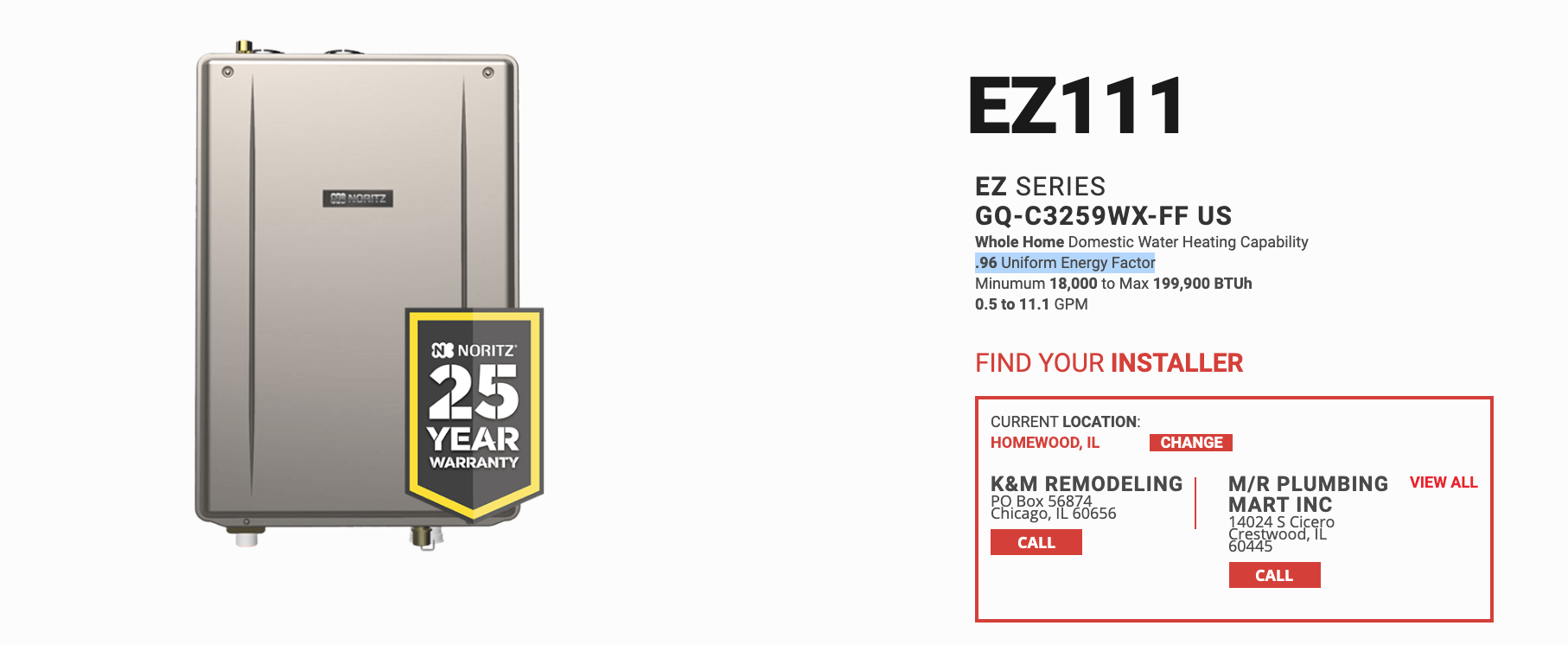
Most Noritz residential tankless water heaters are Energy Star-certified, but be sure to check your model’s spec sheet or technical information to confirm whether it qualifies. You can also find your residential tankless water heater’s UEF on the Noritz products page by clicking on your model.
To apply, you will need a written certificate that your tankless water heater qualifies for the tax credit. You can download the certificate as a PDF right from our Rebate Center page, which can help you find the best rebates available in your area on qualifying models.
As soon as the IRS announces an extension of the tax credit, manufacturer certificates are updated and made available on our website.
Not sure how to apply for the tax credit from the IRS? You will have to use Form 5695, Residential Energy Credits, on the IRS website. Read more about it here.
Have you ever turned on the faucet to take a relaxing hot shower, only to be hit by an unpleasant stream of cold water?
It’s safe to say we’ve all experienced the inconvenience of having to wait for hot water to arrive at the faucet or shower — most of us every morning. You’ve probably grown accustomed to waiting several seconds or even a minute or two, depending on the distance to your bathroom or kitchen from your water heater in your basement, garage or utility closet on the opposite side of the house. The longer that distance, the longer the wait, the bigger the annoyance.
So why does the water coming from your “hot”-water faucet or shower run cold at first before finally turning hot? When that outlet was last turned on, hot water flowed through the pipes, right?
But once the outlet was shut off, the remaining warm water in the pipes did not return to the water heater for reheating. Instead, it stayed in the pipes and eventually turned cold. When the outlet was next turned on, this resting cold water exited the pipes first, ahead of the incoming hot water from the water heater.
Not only is this inconvenient (and downright uncomfortable if you’re standing in the shower), but a typical American home annually wastes thousands of gallons of perfectly usable potable water down the drain, thanks to lengthy wait times at hot-water outlets in the bath and kitchen.
So what’s the solution? Is it possible to get truly “instantaneous” hot water? Yes, with a hot-water recirculation system that delivers hot water with virtually no wait time.
What Is a Hot-Water Recirculation System?
A hot-water recirculation system delivers hot water to a faucet, shower or appliance in seconds, eliminating the usual water-wasting wait. The system does so by recirculating the water that remained in the pipes and eventually turned cold, back to the water heater, through either the cold-water line or a dedicated return line.
One type of recirculation system — and the focus of this blog — is a closed-loop, pump-assisted, hot-water recirculation system.
A recirculation pump can operate 24/7. But the energy savings would be nonexistent if the external circulator were always on and continuously recirculating hot water.
The most efficient type of hot-water recirculation system is an on-demand type that operates on the push of a button.
The most efficient “traditional” recirculation method would use a combination of both a temperature sensor and a timer to activate the system.
Recirculation System with a Dedicated Loop
Some recirculation pumps can serve as a separate, add-on component that uses a dedicated pipe loop for hot-water recirculation.
Here’s how a recirculation pump with a dedicated return line works:
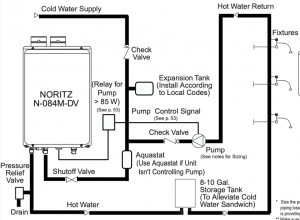 Hot water flows from the water heater and passes near each hot-water outlet.
Recirculation System with an Integrated Pump
Some hot-water recirculation pumps are built into the water heater itself. An integrated recirculation pump is ideal if your home lacks a dedicated return line, and you want to avoid the cost of adding one.
Another option is to purchase a “crossover kit” that is sold with the water heater and acts as a substitute for a return line.
Instead of wasting energy by having hot water flow through the system continuously, some water heaters have an integral display on the front of the unit that allows homeowners to program the recirculation system to operate at specified times.
In conclusion...
Whether you choose to install an external recirculation pump or go with a fully integrated system, the benefits for both are clear. A hot-water recirculation pump eliminates the need to wait for hot water by recirculating the water through your plumbing system, keeping hot water flowing and ready for the moment someone turns on the faucet or shower.
Hot-water recirculation dramatically reduces water waste. With time and temperature sensors, hot-water recirculation pumps can control when the recirculation kicks on, ensuring that energy is not constantly being wasted.